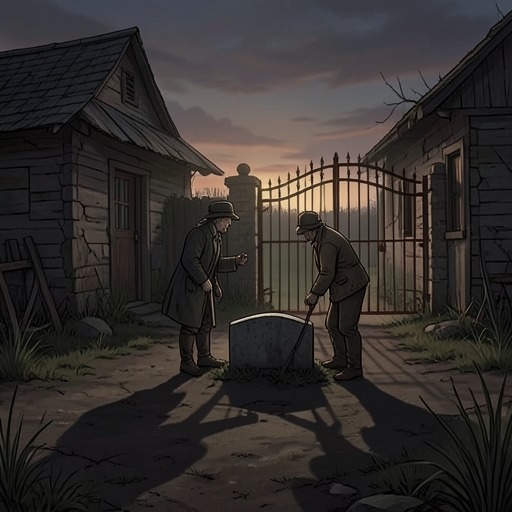
Death of Tillie Stepson
Killers of the Flower MoonTillie Stepson’s suspected poisoning in July 1923 left her children under the control of Kelsie Morrison, the man she had come to fear, and her estate in his hands. She died before she could revoke his guardianship or prevent him from inheriting; the death was never investigated, even as evidence recounted later implicated Morrison in her killing and extended the danger to the next generation.
Marriage and Control of the Estate
Tillie’s death followed the killing of her husband, William Stepson, a steer-roping champion whose death in 1922 was attributed to suspected poisoning. Authorities never prosecuted anyone for that killing, but came to believe that Morrison was responsible. An associate told the Bureau that Morrison had admitted killing William so that he could marry Tillie and gain control of her valuable estate.
By then, Morrison had divorced his Osage wife. After William’s death, he married Tillie and became guardian of her two children. The marriage thus placed him in a position to control both the family’s property and the children’s interests—a position Tillie later tried to undo.
Tillie’s Suspicions and Death
Tillie grew suspicious of Morrison, particularly after he was overheard discussing the effects of strychnine. She confided to her lawyer that she wanted to keep Morrison from inheriting her estate and to rescind his guardianship of her children. In July 1923, before she had carried out either change, she died of suspected poisoning.
The timing left her intended safeguards unrealized. Morrison took much of her fortune, while the possibility that he had poisoned her went without an official investigation. The account presents not a prosecuted case with a judicial finding, but a sequence of suspicion, intended legal action, sudden death, and loss of the estate.
Later Evidence and Unanswered Accountability
Years later, Marvin Stepson, William’s grandson, told the book’s narrator that Morrison had admitted to an associate that he killed Tillie. Morrison reportedly asked the associate why he did not likewise take an Indigenous woman and do the same. The account connects this reported admission to the earlier suspicions, but no investigation or prosecution followed Tillie’s death.
Morrison’s letters also indicated that he planned to sell part of the estate he had swindled to H. G. Burt, a banker who appeared to have been involved in the killing of W. W. Vaughan. The planned sale links Tillie’s stolen property to a wider network of suspected crimes, though the evidence does not establish that a sale was completed.
The Children and the Continuing Threat
Tillie’s death did not end the danger to her family. Her son—Marvin’s father—was three years old when William and Tillie died; his nine-year-old half sister was also left vulnerable. In 1926, while imprisoned for killing Anna Brown, Morrison sent a note to William K. Hale asking how he could gain control of the children’s money after his release. Guards intercepted it. Morrison wrote that he had the children adopted and considered taking them out of the state; authorities feared he intended to kill them.
The episode makes Tillie’s death part of a continuing struggle over inheritance and guardianship, rather than an isolated suspected poisoning. Her plans to protect her children were cut short, and the subsequent threat to them shows how control of an estate could outlast the deaths through which it was acquired. Marvin’s account, given decades later in an Osage courtroom, also restores the family consequences that an official tally of murders could leave in the background.